I was partly responsible for research and the creation of the physical signs as well as mapping the different user flows and pain points.
We presented the result with storytelling to the stakeholders for feedback
Parkster

UX Design
Application
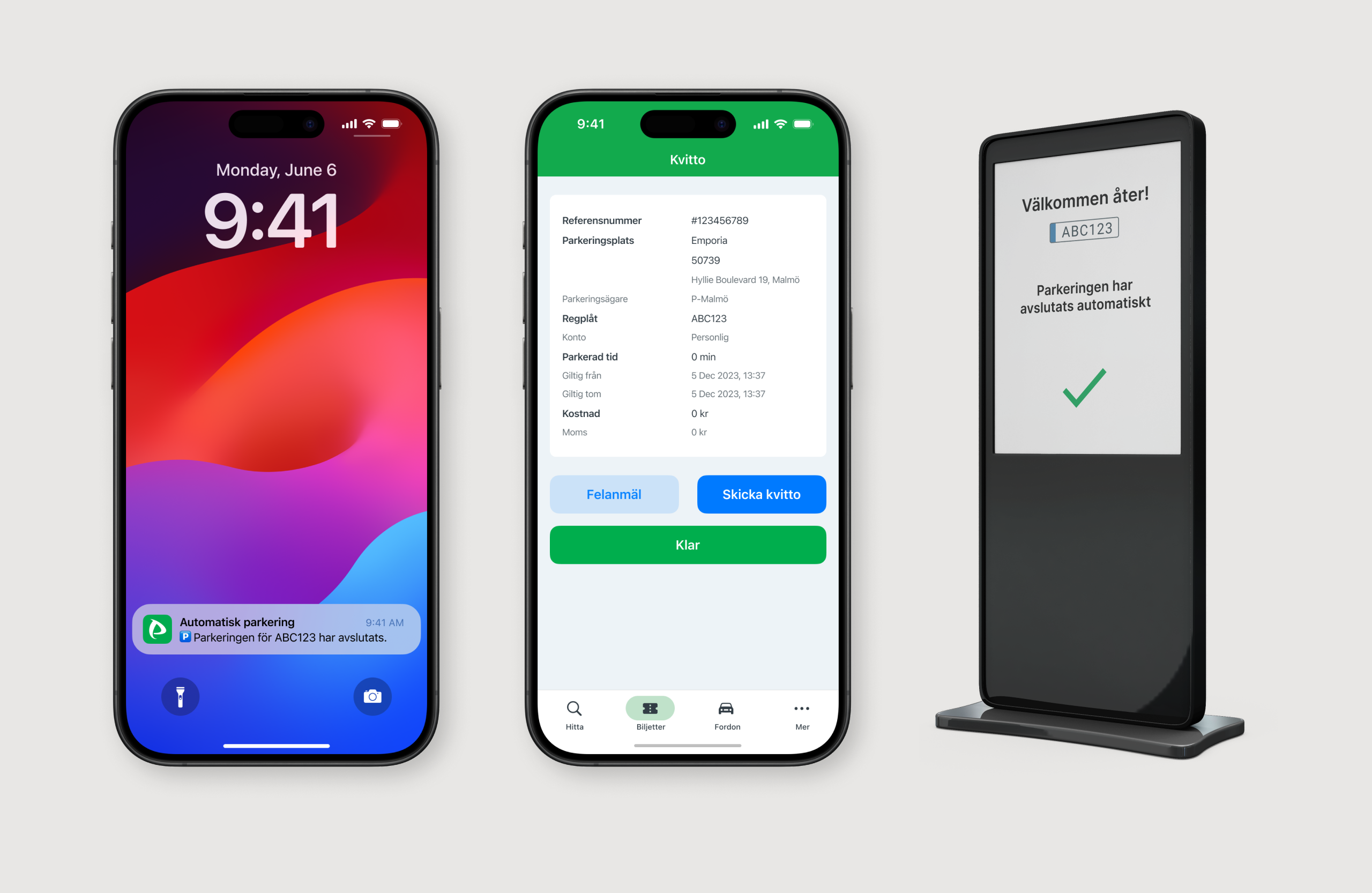
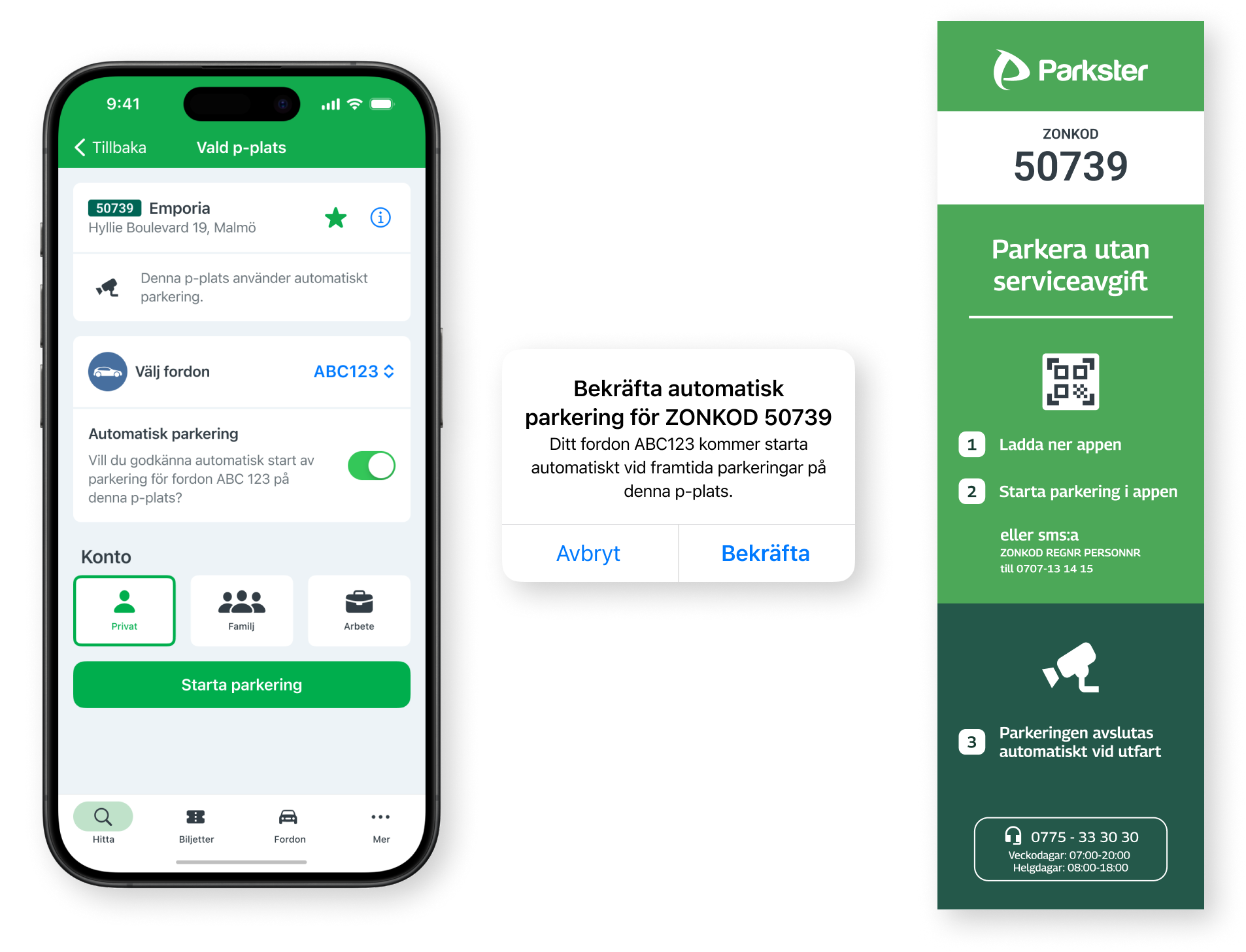
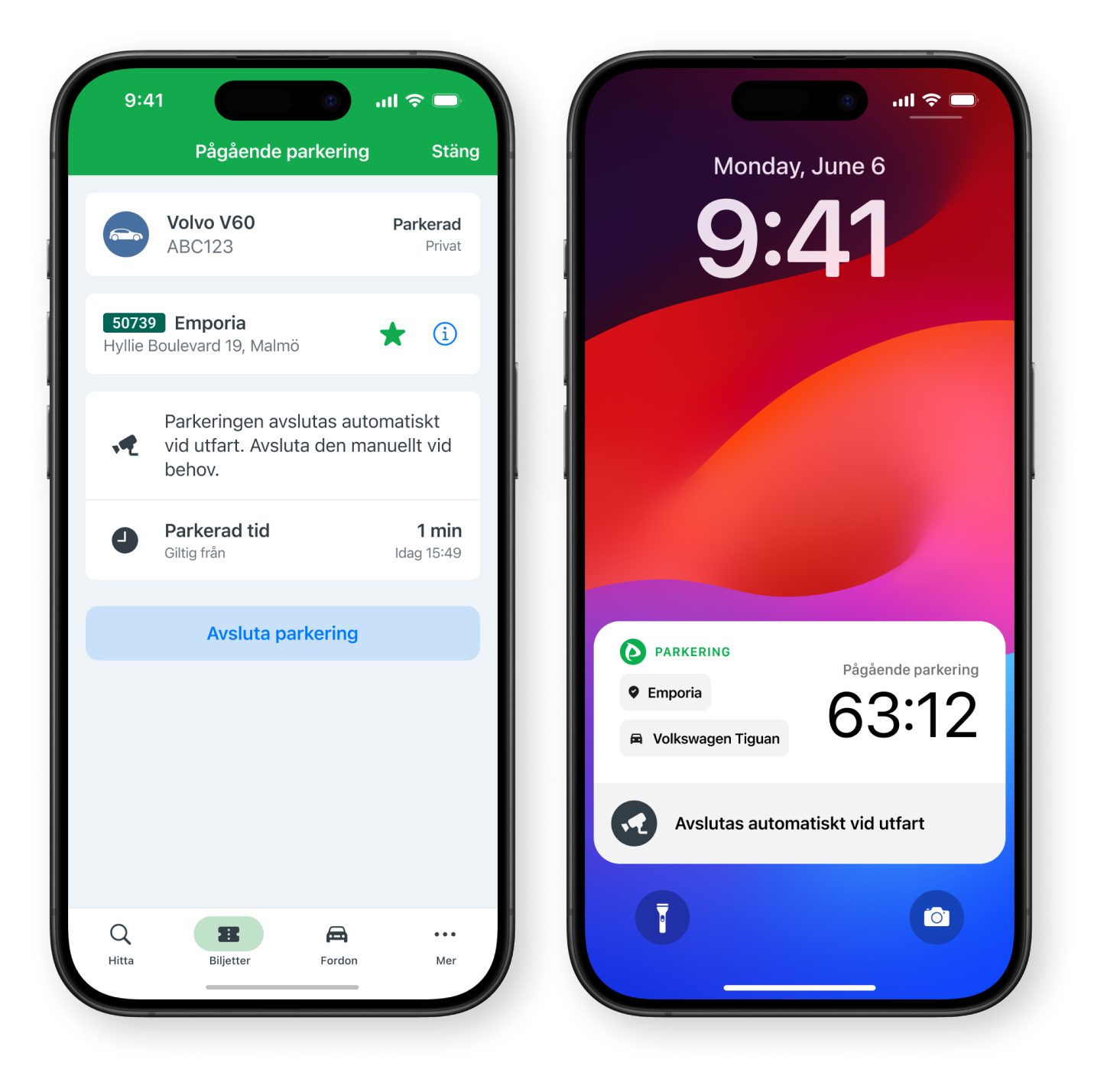
The goal was to research how the Automatic Number Plate Recognition (ANPR) function could be made more clear to the user both in the application and in the physical room.
I was partly responsible for research and the creation of the physical signs as well as mapping the different user flows and pain points.
We presented the result with storytelling to the stakeholders for feedback
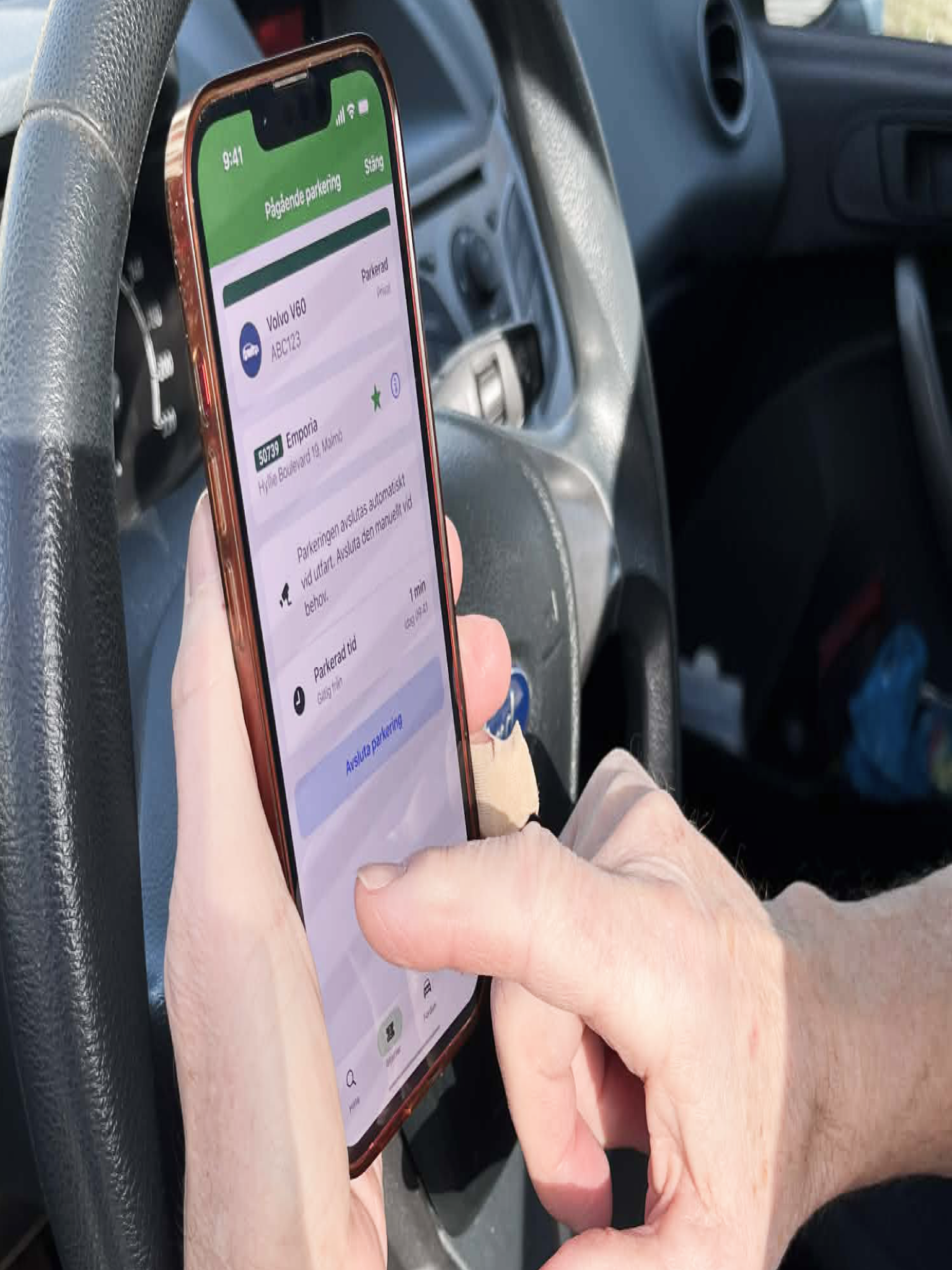
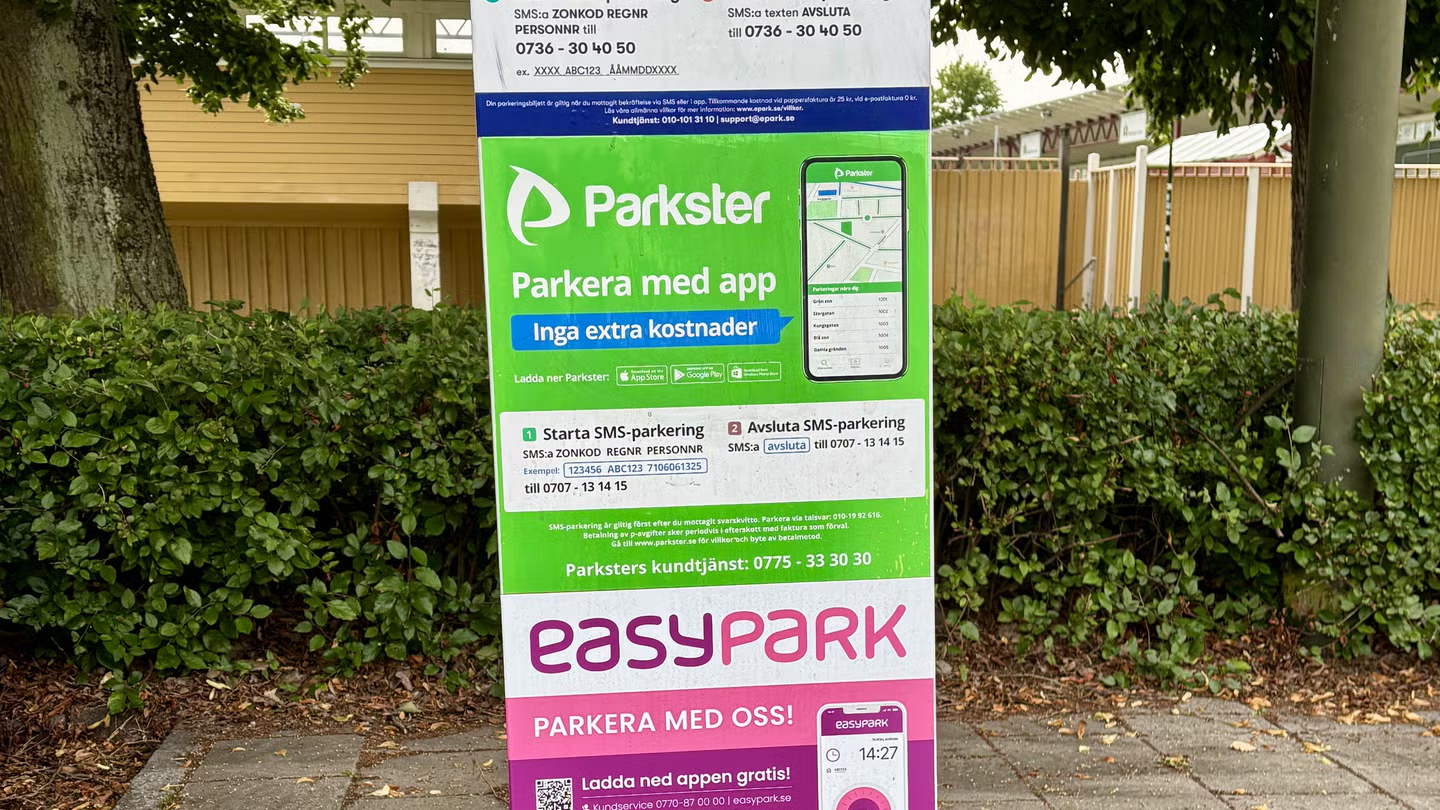
We conducted a field study by interviewing users and by analyzing the ANPR flow in the real context of use to identify pain points. We mapped out the user flows and improved the communication where needed, both in the application and in the physical room.
Common Responses
Pain point
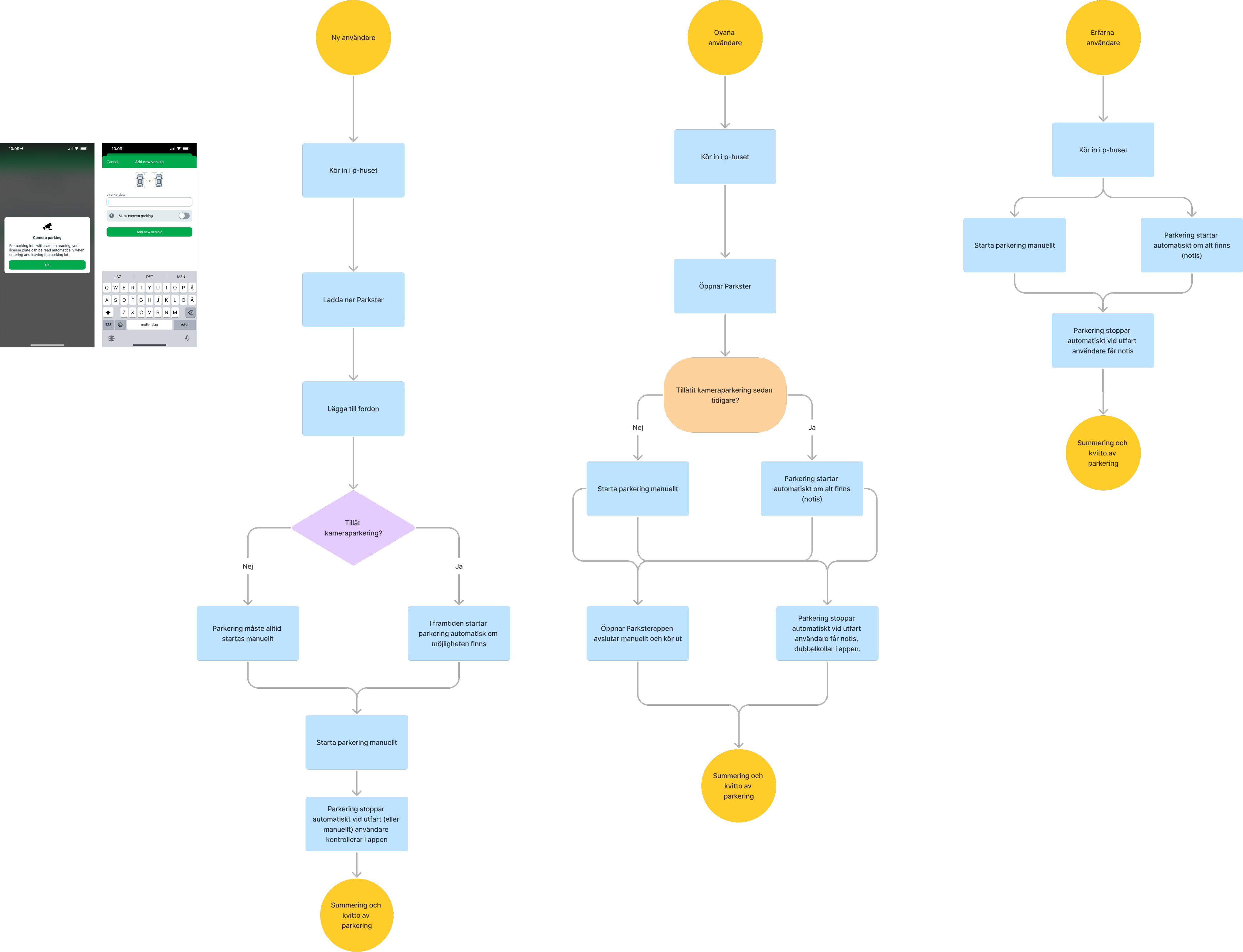
Flow map of user scenarios and their identified pain points.
Dream scenario
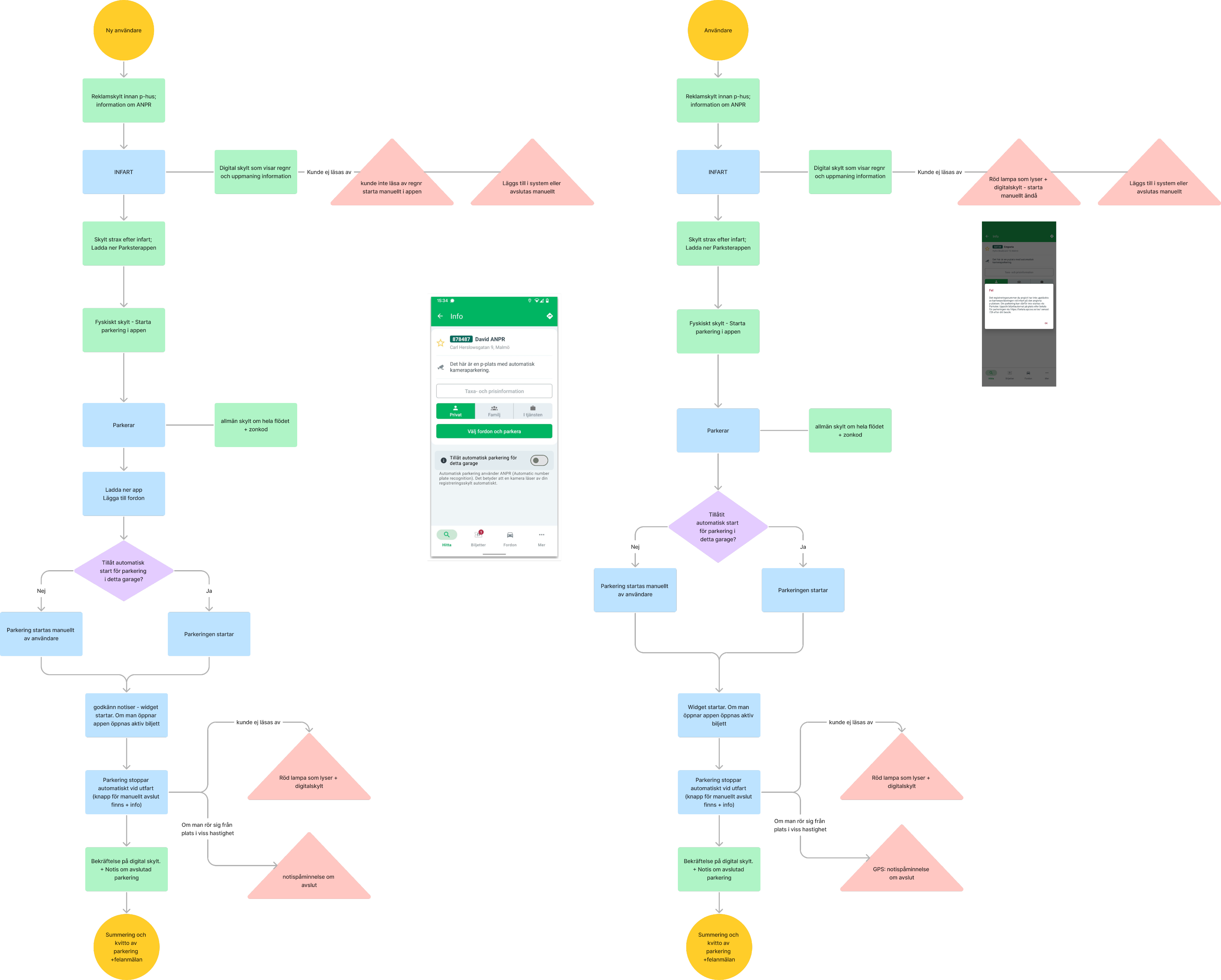
Flow map of the dream user scenario. Result from the research.
Sequential structure of the flow: select location, start parking at the chosen parking spot, parking in progress, end parking, receipt.
Reflection
This task was quite a task to work with. I do not have a driver’s license and therefore lack prior experience with parking. An interesting challenge to take on, but also beneficial for the design group, as we had a kind of built-in “lack of knowledge” to test and interpret against our assumptions.
During the work on the new flow in the app, we discussed and debated with each other how to present our findings and solutions. We relied on how the structure of the existing environment works. That is, using the building blocks available in iOS to make things easier for the user and avoid having to retrain them with new types of interactions that do not match their expectations.

Parkster
UX Design
Application
The goal was to research how the Automatic Number Plate Recognition (ANPR) function could be made more clear to the user both in the application and in the physical room.
I was partly responsible for research and the creation of the physical signs as well as mapping the different user flows and pain points.
We presented the result with storytelling to the stakeholders for feedback
We conducted a field study by interviewing users and by analyzing the ANPR flow in the real context of use to identify pain points. We mapped out the user flows and improved the communication where needed, both in the application and in the physical room.
Common Responses
Pain point
Flow map of user scenarios and their identified pain points.
Dream scenario
Flow map of the dream user scenario. Result from the research.
Sequential structure of the flow: select location, start parking at the chosen parking spot, parking in progress, end parking, receipt.
Reflection
This task was quite a task to work with. I do not have a driver’s license and therefore lack prior experience with parking. An interesting challenge to take on, but also beneficial for the design group, as we had a kind of built-in “lack of knowledge” to test and interpret against our assumptions.
During the work on the new flow in the app, we discussed and debated with each other how to present our findings and solutions. We relied on how the structure of the existing environment works. That is, using the building blocks available in iOS to make things easier for the user and avoid having to retrain them with new types of interactions that do not match their expectations.
Parkster
UX Design
Application
The goal was to research how the Automatic Number Plate Recognition (ANPR) function could be made more clear to the user both in the application and in the physical room.
I was partly responsible for research and the creation of the physical signs as well as mapping the different user flows and pain points.
We presented the result with storytelling to the stakeholders for feedback
We conducted a field study by interviewing users and by analyzing the ANPR flow in the real context of use to identify pain points. We mapped out the user flows and improved the communication where needed, both in the application and in the physical room.
Common Responses
Pain point
Flow map of user scenarios and their identified pain points.
Dream scenario
Flow map of the dream user scenario. Result from the research.
Sequential structure of the flow: select location, start parking at the chosen parking spot, parking in progress, end parking, receipt.
Reflection
This task was quite a task to work with. I do not have a driver’s license and therefore lack prior experience with parking. An interesting challenge to take on, but also beneficial for the design group, as we had a kind of built-in “lack of knowledge” to test and interpret against our assumptions.
During the work on the new flow in the app, we discussed and debated with each other how to present our findings and solutions. We relied on how the structure of the existing environment works. That is, using the building blocks available in iOS to make things easier for the user and avoid having to retrain them with new types of interactions that do not match their expectations.